Patience, Persistence and Faith


Life is a journey worth taking, even though none of us has been given the choice to take it or not. Now that we are here, in it, let’s explore together some aspects that would make this inevitable journey enjoyable, as well as rewarding.

Remember learning to ride your first bike, competing with your classmates, working hard to get your first paycheck? None of those, and million other things, you’ve achieved or endured, would have seen the light without the jewel of all virtues: Patience!

Yet, patience alone is not enough, especially if it was serving the wrong dream; something that would lead to agony instead of joy, to disappointment not satisfaction. But do we always pick and choose what to bear and what not? A sudden illness, the death of a loved one, natural disasters, the list is long, very long.

Here comes another weapon in the face of the unfortunate: Persistence. One could be patient, but that patience is short-lived, fleeting as soon as the squeeze of the situation gets firmer. I’m not talking hypothetically, but rather factually.

Persistence is staying the course, no matter what it takes. Tough? You bet! Nevertheless, and most of the time, behind that mountain of toughness there would be a meadow of peace.

Now you might ask: Where do I get the momentum, the positive energy to be patient and persistent? You need a purpose you believe in. And that is the third element: Faith.

Without unwavering faith in what you do, and where you’re going, it’s almost impossible to endure patience, let alone persistence. Faith gives you the capacity to ‘see’ what’s beyond that which seems ugly and impossible. It gives a feeling of assurance and an enriching sense of possibility, of reaching that which you’ve been striving to reach.

In the next story we will talk about tips that would enhance our ability to attain and maintain these three vital life endowments: Patience, Persistence and Faith.

Stay tuned!

TWM


P.S. This post has also been published on Medium.com under Yaman Saleh, Owner of TWM

View at Medium.com

The Leader-Manager Entrepreneur


One of my favorite books on leadership is the late Stephen Covey’s: The Seven Habits of Highly Effective People.

Covey’s articulation is top-class. He convinces you that there are two almost independent spheres: One for the leader and another for the manager. Could one person juggle between the two? Covey didn’t particularly recommend that, stressing that a leader should not be consumed by the day-to-day details of the business. Rather, he or she should be totally focused on vision, mission and long-term objectives.

While this can be true in corporations, when it comes to small businesses and entrepreneurship, the lines between the two worlds become rather blurry.

One day, your main focus would be on the five-year strategy of your marketing plan, the next you find yourself under a desk plugging Ethernet cables, or sorting out receipts of recent purchases. And that is the beauty of the whole thing, of the one-man-show adventure. That’s how it starts, and sometimes, that’s how it continues to run. Having said that, I do strongly recommend starting with a credible partner, who would stick with you the whole journey. Loneliness could be tough when the winds are not behind your sails.

In the previous article, Risk and Reward: The Two Vital R’s of Business, we talked about how an entrepreneur must evaluate their RT before delving into the ocean of business on their own. Here we explore how that is tested on the ground, in the midst of it. Now you know how much risk you can bear in order to reap a reward you had seen before you started!

On the lighter side of things, one would need suits and overhauls in their closets. Black, shiny shoes and thick, sturdy work boots. Fine perfumes and grease-cleansing hand soap.

This is not living two personalities. On the contrary, this is extracting the best of your God-given talents and putting them on the line.

Switching between the two roles becomes natural over time. A new, well-rounded personality, rooted in a character of offering true value and sincerity, evolves out of the continuous interaction with challenges and finding intelligent solutions.

Another aspect of this dual responsibility/multiple hats dynamic is being able to focus entirely on the one task at hand, no matter how different the previous or the next task would be. For example, you could be in a meeting with business stakeholders to discuss your product strategy. While in that crucial meeting, you remember that afterwards you must take care of an urgent maintenance issue in the office. The stakeholders meeting calls for your leadership presence, while the maintenance problem requires handyman skills. Being able to focus and then shift is key here. You could think of other interesting and fun examples that fall into the same realm.

Is there a special training for such interactive talent? I don’t think so. The best training is on the job, by actually trying, making mistakes, and learning, till the pool of skills is honed to almost perfection.

Enjoy!

The Wealth Maker

Risk and Reward- The Vital Two R’s of Business


We are risk takers by nature, all of us, in varying degrees. But marching into the unknown is a human instinct that manifests itself in obvious, as well as mysterious ways. Every hour of every day we take risks. You may allow your mind to explore this idea and find examples. Traveling to a new country, hiking an unmarked trail, buying a gift for a loved one, tasting a weird- smelling food, going to war, getting married, asking for forgiveness, climbing the Himalayas, camping, skiing, driving, falling in love, leaving home, and doing nothing is also a form of taking risk, yet indirectly.

For the sake of our topic, let’s narrow down that endless list to just one: Starting your own business and deciding to become an entrepreneur.

Why do people leave the comfort and security of a guaranteed pay-check, and go on their own? For starters, that comfort has become unattainable lately. Downsizing, mergers, acquisitions, financial crisis, to name a few, have made job security a thing of the past.

But that is not the main reason entrepreneurs go out and face the world alone. It is something within each and every one, a calling if you will. I bet you’ve heard this before and you might be thinking: “OK, a calling, but what is the percentage of success of that calling? Show me the money!”

True, no matter how strong a calling was, and how enthusiastic the person would be, a business venture must yield financial results. In other words: Money 🙂

That’s why, before delving in the ocean of entrepreneurship, one must evaluate few traits that are vital to making that journey a pleasant and fruitful one.

So what are those traits? The first that comes to mind is risk tolerance. I’ve talked about this, giving it an acronym of RT in several posts about investing, and it still applies here, probably more so. A low RT isn’t going to help here. A very high one would result in taking too much risk, and again that is dangerously dangerous 🙂

We are looking for a healthy RT, which on one hand drives the entrepreneur to explore new, uncharted frontiers, most of the time alone and with little knowledge and tools, and on the other, keeps him/her aware of the potential challenges, and do enough research and preparation ahead of, during and after taking the risk. What is that called in plain English? Wisdom combined with courage. And in eloquent English: Courageously wise or wisely courageous 🙂

The heart of our discussion here is the following:

‘Risk and Reward are proportional: The more risk one takes, the higher the probability of reward. The opposite seems to be true, most of the time.’

Let’s start with a simple example: If you decided not to teach your four-year old child how to ride a bike, fearing the risk of injury, you denied him/her the rewards that come with riding a bike. One of them is innocent joy!

To get any reward, we must do something, right? And any doing involves taking a risk, no matter how small. That’s why they are related proportionally.

Raise the level of one, the other gets a boost. The challenge is to find that threshold where raising too much would result in unwanted results rather than rewards. And that threshold differs depending on the situation.

In the example above, rushing the learning curve increases the risk of injury. Taking the matter way too slow may delay the reward or even prevent it from happening.

We need to be patient with the whole process. We start by taking small risks and observe our emotional and mental reactions, just like building, you start with a foundation, then keep adding to it.

Another aspect of this building process is appreciating the results, no matter how small.

When it comes to building a new business enterprise, the principle would be the same, however, the application is different.

Does that mean you start with a tiny little venture then expand gradually? That’s one way to approach it. Say open an online store with only one product line, give it your best till it starts making profit, then add a second product line, and so on.

Nevertheless, if you know that your RT is high enough to get into bigger business adventures, especially if you know you have good financial and practical backing by trusted partners, then you may want to create a vision that would lead to more aggressive plans. For example, starting an eCommerce platform, where small business owners can open their one-product-line stores.

The web is full of tools and articles on how to assess your RT level. Here’s one, which I have no affiliation with, and can’t guarantee its results, but you may want to give it a shot, or look for something else in that line of tools:

http://www.moneycontrol.com/personal-finance/tools/risk-assessment-tools.html

In conclusion, know thyself before starting a new business. The time, money and energy spent doing that is worth the clarity that result from being aware where your next step will hit the ground.

All the best,

The WEalth MAker

How to Show a New Product on Your Site


In the last post we talked about finding and acquiring a product into your online e-Commerce store.

Today we will cover few tips on how to make that product stand out and be easy to reach.

To begin with, I’d like to stress the importance of tags. Every product page should give a facility to list tags related to the product at hand. So what is a tag? Simply put, it is a searchable word that makes finding your product easier on search engines. Think of it as the hashtag you use when tweeting in order to attract the attention of people interested in that specific topic.

Then comes images. The more the better, but no repetition of the same pose or same outlook. You need your images to reflect the beauty, uniqueness, usability and quality of your product. And always put your best image upfront on ads and so forth.

A Product title is so important. It’s the punch line that would make it or break it. Select the words carefully and intelligently, both for SEO purposes and to tell customers what the product is about using as little and as meaningful words as possible. This is the ‘elevator pitch’ of your product. You need to practice being creative, direct and expressive in this department.

Finally comes the detailed description, which is usually the last to grab visitors’ attention, unless they are serious buyers. Here we need to give product specifications, so that the buyer knows what they are getting. Remember that the whole process is virtual and there is no physical appreciation. That’s why the description needs to compensate for that by being accurate and comprehensive.

Let’s have an example. Suppose the item you want to display on your storefront is a backpack bag. What kind of tags do you need to embed in the product page? Waterproof, light-weight, phone-pockets, school, business, laptop, and any other product-specific, unique features that would lead searchers to this item.

How about the title? Here’s a suggestion: “Waterproof, multi-purpose backpack for school or business.”

The images must show the bag from different angels, and must show the inside, where the user has ample space and good organization for their stuff.

The description specifies the bags material, interior and exterior, the brand, the dimensions and capacity, the colors and variants available, and any other detail that would help a buyer recognize the backpack as if they were holding it in their hands and going through its features.

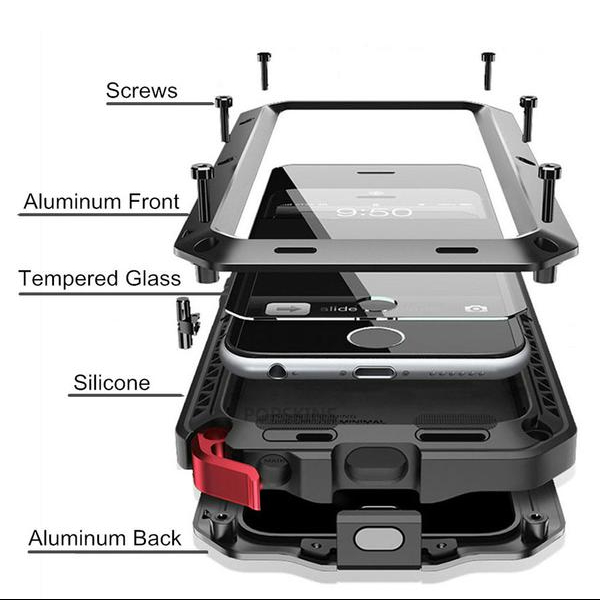
The example below is from my store, storefour.ca. I’ll show all the details from the product page, which are hidden from site viewrs. This will aid our discussion with a real example.

Title: Heavy Duty Shockproof Armor Protection Case + Glass Screen Film for iPhone 7 6 6S Plus 5 5S SE

Description: Retail Package: Yes Size: For Apple iphone 5 5s SE 4.0″ 6 6S 7 4.7″ 6 Plus 6S Plus 7 Plus 5.5″ Compatible iPhone Model: iPhone 6 Plus,iPhone 6s,iPhone 5s,iPhone 6s plus,iPhone5c,iphone 7 Plus,iPhone 6,iphone 7,iPhone SE,iPhone 5 Function: Waterproof,Dirt-resistant,Heavy Duty Protection,Anti-knock Type: Fitted Case Brand Name: TIKITAKA Features: Luxury Doom Armor Metal Case Aluminum Cover Compatible Brand: Apple iPhones Design: Sports,Metallic https://storefour.ca/products/heavy-duty-protection-case-for-iphone-7-6-6s-plus-5-5s-se-cover-metal-aluminum-shockproof-armor-phone-cases-glass-screen-film

C$35.97

Here are the tags:

  • sport
  • running
  • removeable
  • practical
  • portable
  • Pocket
  • Phone-Holder
  • phone-case
  • phone
  • Unisex
  • outdoors
  • Men’s
  • Men
  • iPhone
  • high-quality
  • Heavy-Duty
  • Gift
  • Durable
  • Digital
  • boys
  • blue
  • black
  • Armor
  • Waterproof

And the extra images:

Heavy Duty Shockproof Armor Protection Case + Glass Screen Film for iPhone 7 6 6S Plus 5 5S SEHeavy Duty Shockproof Armor Protection Case + Glass Screen Film for iPhone 7 6 6S Plus 5 5S SEHeavy Duty Shockproof Armor Protection Case + Glass Screen Film for iPhone 7 6 6S Plus 5 5S SE

Heavy Duty Shockproof Armor Protection Case + Glass Screen Film for iPhone 7 6 6S Plus 5 5S SEHeavy Duty Shockproof Armor Protection Case + Glass Screen Film for iPhone 7 6 6S Plus 5 5S SEHeavy Duty Shockproof Armor Protection Case + Glass Screen Film for iPhone 7 6 6S Plus 5 5S SEHeavy Duty Shockproof Armor Protection Case + Glass Screen Film for iPhone 7 6 6S Plus 5 5S SEHeavy Duty Shockproof Armor Protection Case + Glass Screen Film for iPhone 7 6 6S Plus 5 5S SEHeavy Duty Shockproof Armor Protection Case + Glass Screen Film for iPhone 7 6 6S Plus 5 5S SEHeavy Duty Shockproof Armor Protection Case + Glass Screen Film for iPhone 7 6 6S Plus 5 5S SE

This page gives each visitor something they may be looking for: A certain use, dimensions, colors, etc.

The ultimate goal is to convert a visitor into a buyer. This attention to the way you post your product helps in that regard, but of course, it isn’t the whole story, something we will chat about in our next post. Stay tuned!

The Wealth Maker
© Article Image Credit: https://storefour.ca

How to Choose the Right Product


In e-Commerce, products are represented by images, multiple images that aim to show site visitors how the product looks and feels, how it serves the need it is intended for, and how it is superior to other, similar products on the market.

As you can see, this involves several skills, tools and decisions. The first and most important decision must answer the question: Will this product appeal to the visitors of my site, and does it serve their needs effectively? The next question concerns the price: Is the product priced competitively, while still making a profit?

If you’re like many new e-Commerce entrepreneurs who decided to open their own online stores on platforms such as BigCommerec™ and Shopify™, you might have considered drop-shipping as an alternative to traditional approaches.

The idea is innovative, yet simple. Instead of keeping inventory and worrying about shipping to your customers, a drop-shipping model takes care of that. The products on your online store come from suppliers from all over the world, who, once an order is placed, process the request then ship directly to your customers.

In addition to saving time, energy, space and money, drop-shipping makes adding new products or deleting old ones a fun exercise. All you have to do is brows through a supplier’s catalogue, pick the items you like, modify few things to make the product fit your overall theme and categories, then push the product to your store, and it becomes ready to view, and hopefully sell.

But how would you know that what you have chosen meets your requirements? To begin with: Do you know your requirements? Before seeking anything in life, we must ask three questions: What, why and how. Requirements answer the ‘what’ question. But in order to get to the right answers, we need to have a clear idea of what the business is about; what values it serves, and what objectives it aims to achieve.

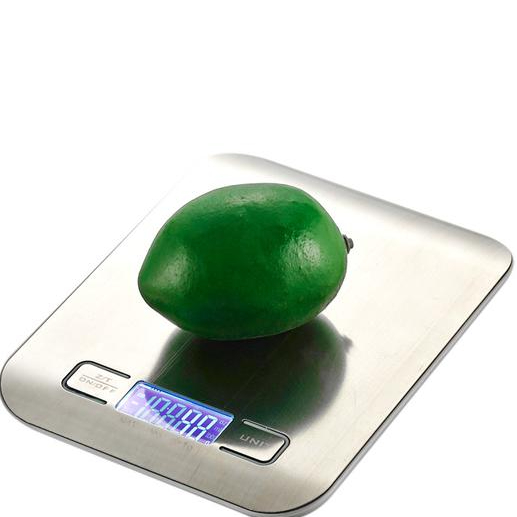
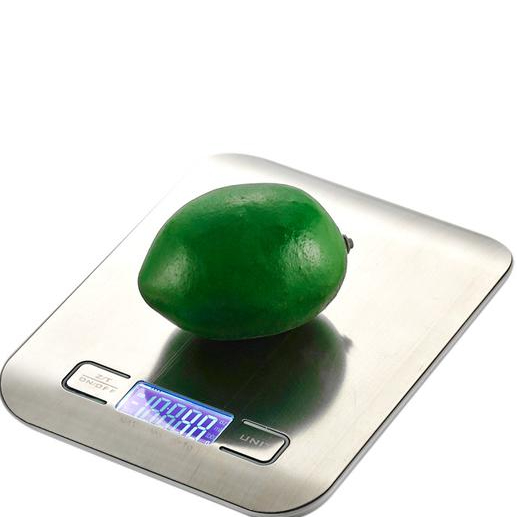
One of the collections in my online store, storefour.ca is named Digital. For any product to fit into that collection it must operate digitally, or has a digital aspect to it. Here’s an example:

So knowing your requirements is the first step to selecting the right product. The second is knowing the supplier. The e-Commerce landscape is so crowded. Finding the right supplier takes doing your homework diligently: reviews, returns, age on business, location, complains. The list is long, but you will figure it out based on what you’re looking for.

Now you know what you want and where to get it. The third step is to find the right channel and process to communicate with the supplier and secure the product.

If we go back to the drop-shipping model, the e-Commerce platform you use plays a key role in helping its merchants find credible suppliers as part of its service. Shopify™, for example, recommends an app named Oberlo™, which connects you to a pool of previously verified suppliers, making your life a lot easier. Yet, to be on the safe side and save your business future hassles, keep doing your research even on recommended suppliers.

The point here is to use all resources available to select and show the best product on your store.

More details on this in our next post, stay tuned!

The Wealth Maker

©Article Image Credit: https://storefour.ca

Telemedicine: A Brief History


In the mid-Nineties, telemedicine had started gaining attention and investment of time, money and energy by top-tier universities and healthcare institutions, especially in the US.

The two major practices utilizing telemedicine were radiology and pathology, giving rise to what was referred to as tele-radiology and tele-pathology, respectively.

In tele-radiology, a hard-copy of an X-Ray film would be scanned to produce a digital image. The image is compressed, stored on an image database, then transmitted over leased telephone lines to a reading center. These centers were members of a telemedicine network, offering second opinions on cases from locations that didn’t have the same level of medical expertise as the one available at the remote medical institution. Everyday, a radiologist at the reading center would view yesterday’s cases on proprietary, large monitors, make an assessment, then send back a consultation over fax lines to the requesting physician. Discussions of the consultation would take place over the phone between the two physicians/specialists, if needed.

Tele-Pathology worked in a similar fashion, yet both required specialized, usually large-sized equipment, trained staff, and long time for the whole process to conclude. A single X-ray sheet would take 40-60 minutes, between the time scanning started till the image would reach the reading center.

Today that has become history. Starting from having medical images already in digital format, which eliminated the need for scanning hard-copies, to the ultra speed, ubiquity and packet-switched architecture of the Internet, which cancelled the need to lease telecom circuits. A simple telemedicine session could take place between a doctor and a patient over a Skype video call. Expensive circuit-switching is replaced by cheap/available packet-switching.


In future posts we will shift the focus to a specific telemedicine service: Tele-Neurology Service (TNS).

The Wealth Maker

Reaching Out to Patients: Telemedicine


‘When the patient is ready, the doctor shows up’

Every human being goes through ups and downs when it comes to their health, whether it’s physical, mental or emotional.

Finding the right answers to such concerns and reaping the benefits of educated, professional medical advice is an essential requirement for a healthy well-being.

Advances in technology; telecommunications in particular, have opened new, innovative doors to abundance in almost every aspect of today’s life, and medicine is not an exception.

When fine medical knowledge, facilities and skills are combined with sophisticated information technology and state-of-the-art telecommunication systems, you get what is referred to as Telemedicne.

The following scenario gives an idea:

A car accident takes place on a back country road. The ambulance at the scene has a portable x-ray machine, which takes an image of the injured’s fractured knee and transmits it over a satellite up-link to a medical facility, that has a specialized knee surgeon. Almost instantly, the surgeon reviews the images on a workstation linked to the telemedicine network, or even on a tablet connected to an attached image database over a WiFi connection. Upon assessment, the surgeon communicates proper instructions to the paramedics at the scene over a video conferencing channel, guiding them, step by step, on how to handle the delicate condition till the patient reaches the nearest hospital.

So what is telemedicine?

In very simple, non-medical terms, it is a service that allows a patient to communicate with a healthcare provider, virtually, over a specialized system of telecommunication and IT facilities.

In the above example, the injured patient communicated, indirectly through the paramedics, with a knee surgeon, hundreds, or even thousands, of miles away, and received proper care on the spot. That involved utilizing telecommunications links, a secure Internet tunnel, software applications on both ends, and a clear/effective Standard Operating Procedure (SOP), which organizes and manages the whole communication process, as well as the exchange of medical data and final consultation/advice.

There are other details to the service, which can be explained in later posts of this series. But for now, what we need to take from this presentation is the fact that telemedicine is helping patients and healthcare providers overcome the limitations that used to hinder the access and the delivery of top-class medical advice to virtually any spot around the globe, as well as space missions.

The 2nd point is that telemedicine can help almost any medical practice, including dentistry, neurology, internal medicine, surgery of any sort, and a lot more.

Stay tuned for more discussions on how telemedicine works, and on some of its vertical applications, including Tele-Neurology (think here of helping patients residing in rural areas avoid fatal brain stroke incidents).

The Wealth Maker


CanFour: Art, Craft and Technology


‘Started as an element of the multiple streams of revenue strategy (MSoR™), then became a fulfilling passion along the way’

CanFour is an online handmade/crafts store on the Etsy™ marketplace. Etsy.com is a unique medium for people of shared interest and talent in crafts and handmade production to showcase and sell their articles.

The focus of CanFour is currently wood-based handmade items. So far, the store has four products that share a common theme of usability and colorful cheerfulness.

Below are excerpts from CanFour’s project charter:

Purpose:

CanFour is an expression of an original talent with wood. It contributes to the MSoR strategy as a manifestation of the ideal: Do what you love and let the world pay you for it!

Vision:

CanFour is a beautiful online-store, which combines wood craftsmanship with elegant, true art

Mission:

CanFour generates $10K/month, or more, for the MSoR strategy

Operation Principles:

CanFour only provides products that aim to enhance the quality of life and well-being of its visitors and customers.

The Flowing is one of CanFour’s active products:


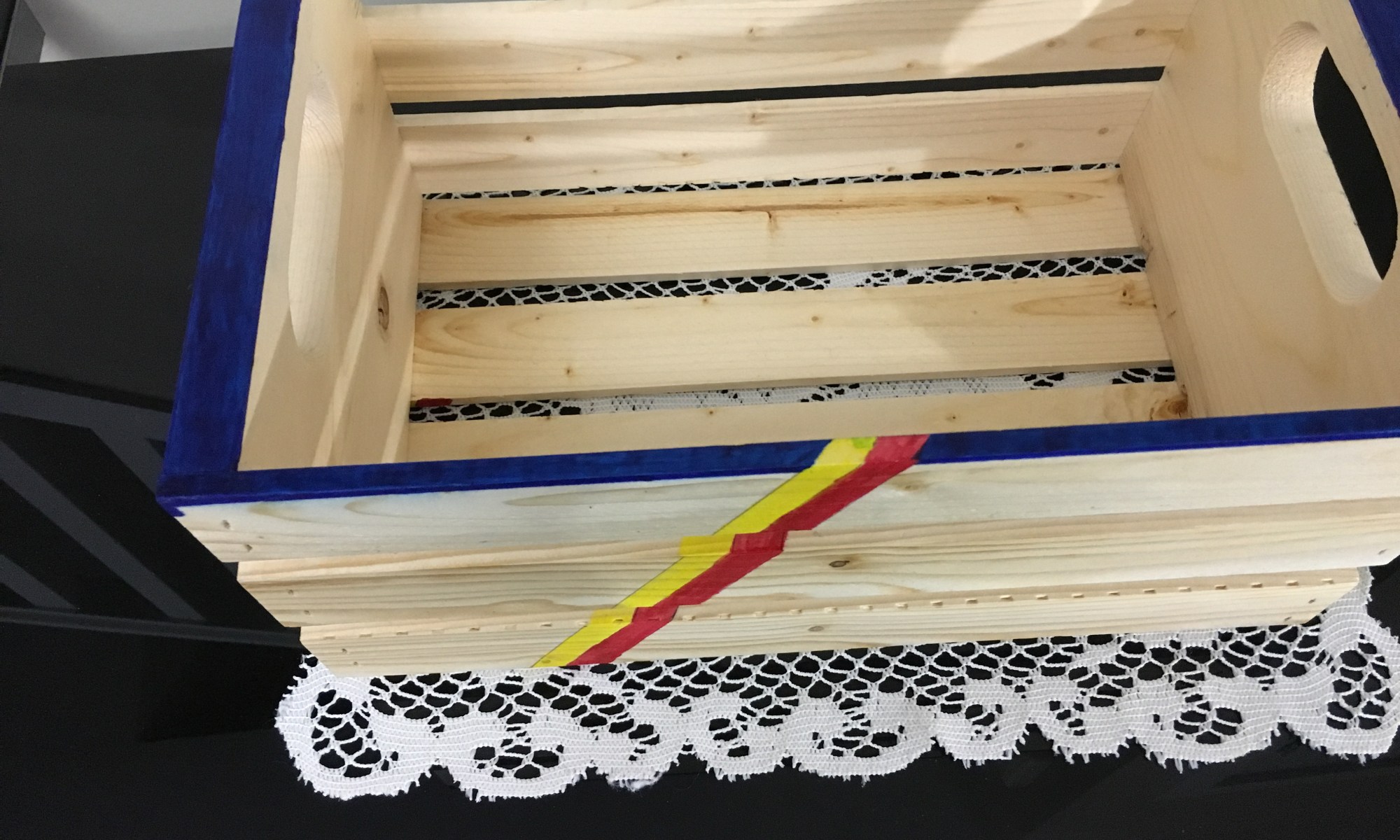
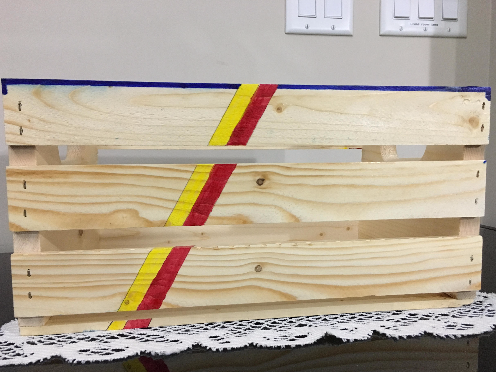
The Everything, Everyday Handy Wooden Colorful Box

C$64.99


CanFour is geared to become a destination for those who look for items that combine the touch of art while provide a useful means for everyday life


StoreFour: Continuous Enhancement


Launching an online store requires a great deal of planning and attention to detail. From selecting the theme, to designing the logo. What will be the static content? How about navigation, payment processing, shipping rules, taxes, and a lot more.

Then once that’s been taken care of, comes one of the most important decisions to make at this point of store building: What exactly are we selling here? Is this going to be a general merchandise or a niche-oriented online experience? Who are the customers, and why would they buy from us?

Down the line from that is product strategy: What products should this store showcase and for how much?

As you move from one stage to the next you realize new understandings and, of course, learn new things.

The final ‘product’ just before the launch will never be perfect, and you know it. But does that mean you keep improving while delaying the launch? No! Continuous enhancement must hold a permanent place-holder on your project plan, just as sales and marketing. Failing to do so means choosing to fail in this fiercely competitive landscape.

Since the launch back in May, StoreFour has gone through several reviews, the last being just very recently. The depth and breadth of each review vary, but they all keep asking some essential questions:

  • In exchange for revenue, what value does this store offer?
  • Do current products serve that value?
  • Is there a clear line of sight between the products and the vision/mission of the business?
  • Are customers satisfied? How can we measure that, then improve it?
  • What products to keep, modify and/or delete?
  • What products to add?
  • Are marketing and sales efforts fruitful so far, and if not, why? How can they be enhanced?
  • What are the short and long-term objectives of this store?
  • Are the store’s design, look and feel expressive of its message and brand?
  • Is it easy to navigate and find information?

As you you can see, the questions do not follow a specific order. In these reviews, you capture questions as they arise, randomly. I like to use a large poster and a bunch of colored markers to write down whatever comes to mind. Then gradually move to a mind-map, before finally creating an action plan on a digital tool.

Casually writing down thoughts, questions and ideas allows something interesting to emerge: Clarity!

While just before you’d started your mind was processing everything simultaneously, and rapidly, now it can observe patterns and priorities, reasons and results. It’s much easier now to find answers and chart a new course, or adjust an existing one.

During the last review, which concluded around mid October, I realized that we need to have more focus on our brand, which means redefining or resharpening the concept behind that brand.

While the message has been to ‘Be, Love, Create and Live’, the products didn’t clearly trace back to it. The four dimensions sit on the titles of four product collections. However, when reviewing individual products, it wasn’t very obvious how each one would serve that message.

We finally came to an interesting conclusion: Let’s not try to find ‘Love’, or ‘Create’ products per say, but rather look a bit deeper and ask: Can a ring, for example, help the customer promote love in her or his life? How about a wallet or a bag? does any have a link to ‘Live’ or ‘Create’? And isn’t ‘Be’ a common thread underlying all others?

Of course, another concern is: What is the market pulse for any product we offer? On the one hand, we definitely want to provide true, authentic value. Yet on the other, the business must meet its financial objectives in order to continue serving that value and progressing to even higher levels of success.

From that understanding, and to bring more focus to the product offering, we decided to keep the main theme, but rename the collections: Rings, Bags, Wallets and Digital.

With few specs about what products to choose for every collection, including high-quality, trendiness, and usefulness, we did an extensive research and decided to have only nine products under each collection. This is a major shift from 30 or so products, some didn’t clearly reflect the theme. Now when a customer clicks ‘Rings’, she or he will only see rings under that collection. The same applies to Wallets, Bags, and Digital.

It’s logical and natural after feeling that comfortable with the content of your store to turn to marketing with a renewed will and a fresh determination.

On that, StoreFour now has its Twitter and Pinterest storefronts up and running, with new content and interaction on a daily basis. Facebook already showcases StoreFour, and all are ready from another round of ad campaigns.

We are very pleased to share these exciting developments with our readers, and as always, happy to hear your questions and comments.

Till the next post, be open to new, enriching ideas!

The Wealth Maker

© Image Credit: StoreFour, https://storefour.ca All Rights Reserved

The Soaring Eagle Group™, SEG: An Overview


What’s in a name? Inspiration, motivation, direction? How about: ‘A fresh view through an Eagle’s eye, every day.’?

The Soaring Eagle Group™ (SEG) was born years ago before the launch of my poetry blog: “The Soaring Eagle, a free soul, like an eagle.” The blog’s URL still carries the original name: earlyeagle1. Our eagle is both early and soaring 🙂

The group now embodies our Multiple Streams of Revenue (MSoR™) strategy, which can be summarized in the following excerpt from the group’s charter:

‘MSoR is a wealth-generating strategy where two or more money-making-machines join forces to provide a stable, sustainable and flexible ‘river’ of revenue for a family or a business.
T = P + (N x S)
Where:
T: Total Revenue
P: Primary source (Established: business, employment, etc)
S: Secondary source
Why is MSoR important?
  • To level and streamline the cash-flow of an institution (diversification)
  • To provide financial safety in the face of the loss of one stream, and/or the fluctuation in one or more sources
  • An opportunity to keep learning, growing and giving
  • Change in this manner guarantees continuous sharpening of vision, creativity and will
  • Lots of fun and an antidote to boredom as opposed to doing just one thing all the time’

You may also refer to our previous post on the concept of Multiple Streams of Income

Right now, there are three online businesses under the SEG:

We will dedicate at least one post to each business in the coming weeks, but for now, here’s a quick highlight of each:

TWM has been a trusted source of original wealth creation and growth knowledge and practices for more than six years. Now the blog is assuming an additional role, to be the ‘voice’ of the SEG, extending its news and updates to readers all over the world. TWM has recently incorporated select online advertisement through WordPress’s WordAds™, to participate financially in the SEG’s MSoR strategy.

StoreFour is an innovative online store geared towards promoting vibrant, balanced lifestyles through products under the theme: ‘Be, Love. Create and Live.’ A new Venture is a previous post on TWM capturing some thoughts about StoreFour.

CanFour is an original art and craftsmanship online store, focusing on handmade wooden products. You may also read this previous post on woodworking.

The long-term vision is to keep these business elements integrated through digital links, as well as organizational solid and/or dotted lines.

The group is working on adding a fifth element during the coming months, and also investigating moving into a multidimensional business hierarchy, which would integrate the existing elements in a larger business model. More on that as relevant details become available and ready to share.

The SEG is active on Linkedin. You may visit the SEG business page here.

Stay tuned, and be truly wealthy!

The Wealth Maker

© Post Image Credit: The Soaring Eagle Group™, SEG. All Rights Reserved


Go back

Your message has been sent

Warning
Warning
Warning
Warning

Warning.